

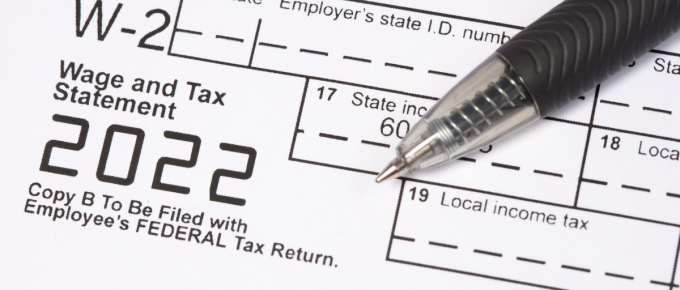
Even though we have taxes due every year, we always have some questions. The tax code changes frequently, and it’s extremely complex. Here are some of the most common tax and tax season FAQs. How Can I Lower My Tax Bill? Far and away, the biggest tax questions are always some variants of “How can I lower my taxes?” and “What deductions am I eligible for?” Tax deductions and credits are the most common way to reduce your tax obligation, whether you are doing your individual or business taxes. The hard part about this question is that it’s different for everyone. A lot of your tax information comes in the form of Information Returns, the forms like 1099s, 1098s, W-2s, and others that show you what your financial activity looked like throughout the tax year. These Information Returns help you fill out the tax forms you need in order to take advantage of many of these deductions and tax credits. eFile360’s top-tier e-filing services offer you a great solution for filling out and storing these forms. What Are This Year’s Tax Changes? Every year, the IRS makes adjustments to the tax laws, processes, and procedures based on the latest government regulations, technology changes, and overall performance during the last tax season. This tax question is one that people are worried about all the time. American taxes are like a high-level puzzle: you have to put all the pieces together, solve the equations, and hopefully submit the right answers. But if the rules have changed, you may be making inadvertent mistakes. The IRS website, specifically their Newsroom, is a great way to stay up-to-date on any and all changes that are coming up during the next tax season. What’s the Difference: W-2 vs. 1099-NEC? The 1099-NEC is one of the newest Information Return forms to be (re)instated. These forms are used to calculate non-employee compensation, including freelancer and independent contractor work. W-2s are given to employees of a business early on during tax …
Latest Updates for 2022 Tax Season & Beyond
You made it! 2021 has ended and it’s time to start looking ahead to the 2022 tax season. Here are the latest updates. Tax Deadlines There are lots of tax deadlines that have already lapsed as 2021 drew to a close, and there are lots more just around the corner. Social Security, Medicare, and withheld income tax are all due on January 18. And January 31 is the deadline to send out forms 1099-NEC. Tax Day this year is still set for April 15, 2022, but that is still subject to change should any new developments in the coronavirus pandemic take place. If you are hoping to get an extension, Form 4868 needs to be filed before April 15, and your tax due date will be pushed back to October 15, 2022. Kentucky taxpayers should also be aware of a recent deadline change in light of the tornadoes that struck certain areas in the state. Victims of the December 10 disasters will have until May 16, 2022, to file individual and business tax returns. ACA Updates ACA Open Enrollment runs from November 1, 2021, to January 15, 2022, so you still have time to enroll or change your marketplace coverage for 2022. There are also new opportunities – like zero-premium plans – for individuals with extremely low-income levels. For more on the ACA changes for 2022, see our previous blog article. 1099-K Updates There are also some changes to 1099-K reporting coming in 2022. If your business or solopreneur gig includes selling products or services on sites like Etsy, eBay, or even Uber, you’ll need to fill out the 1099-K. Right now, online sellers only get these forms if they had 200 or more transactions with a combined $20,000 or more. Starting in the tax year 2022, sellers who have sales totaling $600 or more will be issued this tax form. Inflation Inflation has been a hot topic this year, with rates rising 6.8% in 2021 – the highest jump since 1982. Before these spikes, the IRS had already determined the inflation adjustment rates for tax year 2021 in October 2020. And …
Continue Reading about Latest Updates for 2022 Tax Season & Beyond →

2022 Tax Deadlines to Mark on Your Calendar
The 2022 tax season is just around the corner. To help you get ready, we wanted to put together a list of the most important 2022 tax deadlines that affect you and your business. 2021 Remaining Deadlines As we look toward 2022, there are still a few deadlines and windows in the remainder of 2021. The Open Enrollment window for Marketplace Insurance tied to the Affordable Care Act runs from November 1, 2021, to January 15, 2022. If you want your insurance to take effect immediately on January 1st, you need to select your plan by December 15, 2021. Another deadline yet not past in 2021 is the deadline to maximize 401k contributions. You can still make contributions up to and including December 31, 2021. IRS Publication 509 In the draft IRS Publication 509, the Internal Revenue Service outlines some of the newest changes and reminders for the 2022 tax season. Some of those reminders include: Payment of Deferred Employer or Employee Share of Social Security Tax of 2020: If you are an employer or employee who deferred paying their share of social security or railroad retirement tax equivalent in 2020, 50% of the share is to be made by January 3, 2022, and then applied against the payment due on January 3, 2023. Useful Publications: lists are included to help you navigate the previous IRS publications that pertain to employers, farmers, individuals, and those required to pay excise taxes. W-2s and 1099-NEC There are currently no changes to the process or form make-up as it pertains to the 1099-NEC that reports non-employee compensation. The deadline for these to be sent out is January 31, 2022. Tax Year Deadlines For employers, the due date for December 2021’s social security, Medicare, and withheld income tax is January 18, 2022, if the monthly deposit rule applies. The subsequent monthly deadlines fall on the following dates in 2022: February 15, March 15, April 18, May 16, June 15, July 15, August 15, September 15, October 17, November 15, …
Continue Reading about 2022 Tax Deadlines to Mark on Your Calendar →

Small Business Tax News 2021
There are a number of tax changes brewing, and we want to help keep you and your business in the loop. Small Business Taxes and Government Changes As the first year of a new President’s term is coming to an end, that means there are lots of potential changes on the horizon. According to the National Federation of Independent Business, new proposed tax plan changes will increase the corporate tax rate from 21% to 26.5%, which will negatively impact small businesses classified as C-corps. The good news is that only about 25% of small businesses are classified this way. However, many experts are saying that these changes would still impact small businesses in the coming tax year, if the plan gets approved. There are also changes coming in the form of increasing the top capital gains tax rate and changes to the estate tax, says the NFIB. 2021 Losses All non-corporate business taxpayers can deduct a net trade or business loss up to $262,000 (or $524,000 for joint returns). This includes Schedules C, E, and F business activities. Employee Retention Credit Your business may also be eligible for Employee Retention Credit (ERC). Though initially only applicable to wages paid from March 13, 2020, to December 31, 2020, the recently passed Consolidated Appropriations Act and American Rescue Plan Act have expanded this credit. For tax year 2021, eligible employers can claim the employer share of Social Security tax if it equals 70% of up to $10,000 in qualified wages paid per employee, per quarter. Maximum credits are $28,000 per employee for the year. Qualifying businesses must prove it fully or partially suspended operations due to the pandemic, had a 50% decline in 2020 gross receipts compared to the same quarter in 2019, or less than 80%of 2021 gross receipts when compared to the same 2019 quarter. Net Operating Loss Limits Are Back to Normal The CARES Act relaxed limits on net operating loss for tax years beginning in 2018. 2019, and 2020. But no such …

Growth of the Gig Economy
The growth of the gig economy is a big change-maker for lots of businesses across all industries. Why is Gig Work Growing? The gig economy is taking off for several reasons. Brodmin has an insightful case study about gig work. Though COVID-19 spurred a big wave of workers into the gig economy, favor with the freelance and independent contractor style of work has been growing for a number of years. The pros: flexible schedule, the ability to control your workload, extra income outside your traditional. All of these things align with the work-life balance and benefits that Millennials and Gen Z are looking for in their “dream job” scenarios. Some industries are growing their gig worker base because of new trends. Things like Uber and Airbnb have seen record growth recently, and that trajectory will continue in the coming years. Technology is Leading the Way Other growth areas in the gig economy are being led by technology. Web and graphic design, programming, and IT are at the top of the list of fields experiencing prominent growth in the number of freelancers and independent contractors making up the workforce. Also, with the rise in company use of collaboration tools and other remote-friendly technology, gig work has become more accessible. Computer work can be done from anywhere, and more people are taking advantage of that. What Gig Work Means for Your Taxes Gig economy growth means that your business will be more likely to interface with freelancers and independent contractors on a regular basis. Because gig workers aren’t classified as employees, the taxes associated with your business also differ. According to JustWorks.com, more than 3 million employees are misclassified as 1099 contractors every year. You can only classify the people you hire as gig workers if: They control when and how they do their work They use their own supplies and equipment to carry out the job They get paid directly by varying clients If the person …

Do I Need to File 1099-NEC AND 1099-MISC?
We’ve talked a lot about the differences between Forms 1099-MISC and 1099-NEC. But are there instances where you’d need to file both? 1099-NEC and 1099-MISC The 2021 drafts for 1099-NEC and 1099-MISC have been out since late last year. The goal of reintroducing the 1099-NEC (last used in 1982) was to keep non-employee expenses separate from the 1099-MISC. As more and more businesses rely on independent contractors and freelancers, the 1099-NEC will become more widely used in the future. When to File Only 1099-NEC If you have payments totaling more than $600 to a non-employee, which includes any person or business hired as an independent contractor or freelancer, you’ll need to fill out the Form 1099-NEC. Here are a few other eFile360 blog resources that talk about how the 1099-NEC works: Filing 1099-NEC: Dos and Don’ts Examples of When to Use Form 1099-NEC When to File Only 1099-MISC Your business will need to file a 1099-MISC for every independent contractor you have paid more than $600 within the tax year for anything other than non-employee compensation. You’ll fill out the 1099-MISC after you request and receive that independent contractor’s W-9. Some main items reported on the 1099-MISC include: Rent Proceeds from a fishing boat Royalties Substitute payments made instead of paying interest or dividends Payments for medical and healthcare Crop insurance proceeds Gross proceeds paid to a lawyer Excess golden parachute payments For more resources to help with your 1099-MISC filing, check out these eFile360 blog articles: What You Need to Know about 1099-MISC Online Form Filing A Guide to Preparing 1099-MISC Forms When Do I Need to File Both? In some cases, you may be required to fill out both 1099-NEC and 1099-MISC. In these cases, you will have paid an independent contractor or freelancer more than $600 throughout the year either for services or parts and materials, while also paying: …
Continue Reading about Do I Need to File 1099-NEC AND 1099-MISC? →