

Running a small business is an Olympian feat, so why not take the easy road on some of those complicated tax items? Here are some great tax hacks for small businesses. Pay Attention to the Tax Calendar One of the easiest ways to save money on your taxes as a small business is to make sure you don’t miss any tax deadlines throughout the year. Often, missing a deadline results in penalties and extra fees, which take money out of your business or your pockets. Mark important dates on a physical or electronic calendar, and set up automatic payments if you can. Start Planning For Retirement Have you set your retirement goals? If you haven’t you should. If you invest more into your retirement today, you can often end up with larger tax benefits. Make the most of your expenses by looking into the benefits of upping your retirement savings this year. If You Can, Go for the Home Office Deduction The home office deduction is a tricky one. But that doesn’t mean it isn’t worth looking into. If you have a home office, whether it looks like a professional office or it’s a modified closet, you can take this deduction if you use that space solely for your business. That means the kitchen table, family laptop setup will not be eligible. But if you have electronics or office furniture that you use for the sole purpose of doing work for your business, it is included in the deduction. There is a new, easier caveat to the home office deduction: rather than figuring out a percentage of your expenses to deduct based on the home space you use for your business, you can simply multiply the square footage of your office (up to 350 feet) by $5, and just deduct that dollar amount. Do Some Good Research on Deductions and Tax Credits There are always ways to optimize your business to secure refunds, or at least to avoid owing taxes after filing. Whether you want to take a deep dive into the IRS tax code or you want to invite your favorite tax professional to lunch, …

Is TIN Checking Necessary?
Many e-filing services provide TIN checking as an additional service to e-filing and paper filing. But what is the service? And is it necessary? Many of our customers ask these questions when they use eFile360 to file their 1099s and related forms for the first time. Most customers want to be informed before they complete their order while others are suspicious of add-ons in general. So we wanted to clear the air: TIN checking isn’t necessary to file your 1099s, but this service can save you a lot of headaches. What is a TIN? A TIN is a Taxpayer Identification Number. It is also called a “95-number” or “tax-ID” number. A TIN is an umbrella term that means the following: Social Security Number (SSN) Employer Identification Number (EIN) Individual Taxpayer Identification Number (ITIN) Adoption Taxpayer Identification Number (ATIN) Preparer Tax Identification Number (PTIN) Business owners typically use their EIN to file business taxes and their SSN to file their personal taxes, but this may differ based on your unique situation. When it comes to filing 1099s, 1098s, ACA forms, and W-2s, business owners need to know the TIN for each employee, freelancer, and independent contractor that works for them. Tip: While you may only need to file a form if you pay that employee or contractor $600 within a calendar year, it’s always best to document their TIN before they start working for you. This way, you know that you have their TIN on file way before tax season. What is the TIN Error Reconciliation Process? When it comes to tax reporting, it’s vital that all of the information you file is accurate – including the TINs of your employees and contractors. This is where the TIN error reconciliation process comes into play. This process is three-fold: Check your records Use a TIN checking service, which efile360 offers File Form 1095-C when you find TIN errors The first portion of this process involves you double-checking …
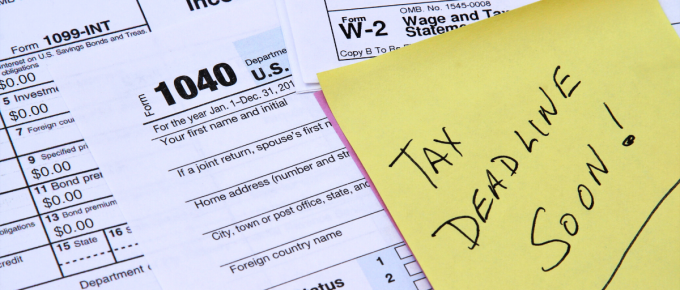
2021 Deadline for Forms 1099-MISC and 1099-NEC
Tax season is around the corner, so it’s time to start gathering information and preparing for the deadlines. What is the 2021 deadline for filing 1099s? The 2021 deadline for Forms 1099-MISC and 1099-NEC is Monday, February 1 since the typical deadline date, January 31, lands on a Sunday. The deadline for Form W-2 is also February 1, 2021. According to CPA Practice Advisor: A 2015 law made it a permanent requirement that employers file copies of their Form W-2, Wage and Tax Statements, and Form W-3, Transmittal of Wage and Tax Statements, with the Social Security Administration by Jan. 31. That is also the date the Forms W-2 are due to workers. This includes Form 1099-NEC and 1099-MISC as it relates to independent contractors and related nonemployees. However, now that nonemployee compensation has been separated from Form 1099-MISC onto Form 1099-NEC, the deadline to e-file Form 1099-MISC is March 31, 2021. What does this mean for your business? Business owners need to file 1099s to the IRS and send pay statements to freelancers, contractors, and other miscellaneous earners by the deadline. This means you will want to start gathering the following information for the independent contractors who have worked for you in 2020: Full name Address Social Security Number or Individual Taxpayer Identification Number Learn more about the latest instructions for Forms 1099-MISC and 1099-NEC from the IRS here. Start your e-filing process with eFile360 E-filing is the quickest and safest way to submit forms, so e-file with eFile360. Create a free account today. Be sure to utilize our TIN Checking service, which helps you know if you are reporting accurate tax IDs and names. Learn more about our TIN Checking service here. …
Continue Reading about 2021 Deadline for Forms 1099-MISC and 1099-NEC →

Does Working from Home Change Your Taxes?
The coronavirus pandemic has created a major shift to freelance and remote work. But what does that mean for your taxes? Freelancing Boom As 2020 wore on, many businesses were forced to let employees go or close altogether in an effort to save themselves from massive losses caused by COVID-19 shutdowns. Two million people in the U.S. have taken up freelancing in the last twelve months, increasing that proportion of the workforce from 28% (where it had hovered steadily for nearly 5 years) to 36%, according to NPR. Freelancing and Taxes As more people head towards freelancing and independent contracting, individuals and businesses who make use of these new avenues and hire them for gigs of all sizes, the amount of 1099 filing, specifically 1099-NEC and 1099-MISC, will increase, too. Rather than send W-2s as you would with an employee, businesses that hire independent contractors will need to prepare a 1099-NEC to report non-employee compensation that totals more than $600 in a year, which includes but is not limited to the wages you are paying the non-employee. Self-Employed vs. Working from Home Employees who are now working from home may feel entitled to tax deductions for the expenses they incur as a result of using their own resources (utilities, office supplies, electronics) to compensate for their loss of office or workspace. But when it comes to taxes, there’s a difference between being self-employed and simply working from home for a larger company. If you are self-employed, running your own business from the comfort of your home, you are and have always been able to deduct home office expenses. Unfortunately, this is not the case for those who work from home and do not own their own business. Does that mean employees are on their own in purchasing the things they need for their new home office? Not necessarily. Employees are encouraged to ask their bosses for stipends to purchase items for their home office. In some cases, employers are …
Continue Reading about Does Working from Home Change Your Taxes? →
Changes for Tax Year 2020
Unemployment, the CARES Act, and more – the tax year 2020 has been interesting. The effects of the COVID-19 pandemic will be felt long-term in many arenas. The tax arena is no different. At the federal and state levels, tax year 2020 looks quite different than previous years. Tax Year 2020: COVID Layoffs In March 2020, millions of Americans were furloughed, laid off, and otherwise out of work due to shutdowns and other pandemic precautions, forcing them to file for unemployment. That, coupled with the stimulus checks that in some cases are still being sent out, means reporting income and expenses for tax year 2020 will look very different for employees. However, employers won’t have it easy, either. In 26 states and the District of Columbia, executive orders have been put into effect that state COVID-19-related layoffs “will not be charged against employers for purposes of calculating the experience ratings that determine their UI [unemployment insurance] tax rates,” according to the Tax Foundation. This is being done to help protect businesses from the unprecedented effects of the pandemic and area- or industry-specific shutdowns. States pay unemployment benefits from UI trust funds, which is where employers’ UI taxes go. Typically, if an employer has an unusually high rate of layoffs within their company, this employer will be hit with higher UI taxes than those businesses who have a history of low layoff rates. For tax year 2020, more than half of U.S. states are waiving this penalty, thus preventing employers who experienced high layoff rates due to COVID from being charged for these “extra” unemployment claims. Keep in mind, many states have not yet decided on a course of action, and six states – Arkansas, Maryland, Mississippi, Nevada, South Dakota, and Washington – have stated that employers will still be charged regularly for this year, regardless of the nature of the layoffs. For more in-depth information about this topic, click …

Freelance Boom: What Your Business Should Know About Freelance Work and Taxes
36% of freelancers do so full time – this is an 8% increase from 2019. How does hiring more freelancers affect your taxes? The freelancing industry in the U.S. is now a $1.2 trillion economy. This was a rising trend before the coronavirus pandemic hit, but now that it’s here and sticking around for a while, the push towards freelance and remote work has accelerated even more. Do you work with freelancers currently? Are you considering working with freelancers at an increased rate or for the first time this year? If the answer is yes, your tax filing process will likely be changing this year. Freelancers, when filing their own taxes, are often taught to think of themselves as their own business. But what does that mean for your business’s taxes when you hire them? The addition of the form 1099-NEC has changed the way businesses that hire freelancers and independent contractors will report those payments in the tax year 2020. Let’s go through some common changes and misunderstandings. What is a Freelancer or Independent Contractor? Your employees, freelancers, independent contractors – they all work for you, so why aren’t they all treated the same from a tax filing perspective? The big difference is in the relationship to your business. Employees (whether full- or part-time) have their income taxes withheld or matched by their employer: independent contractors and freelancers, since they are considered a separate entity, must set that money aside themselves. The hiring company or business does not do that for them. Freelancers also often set their own hours, use tools they purchased or acquired themselves, complete their work in whatever way they prefer, and they can also refuse work. Full employees are not able to do these things without approval from your business managers or supervisors. Do you need help filing as a freelancer or independent contractor? Check out this blog post instead. What Tax Forms Are Needed? At the end of the year, …